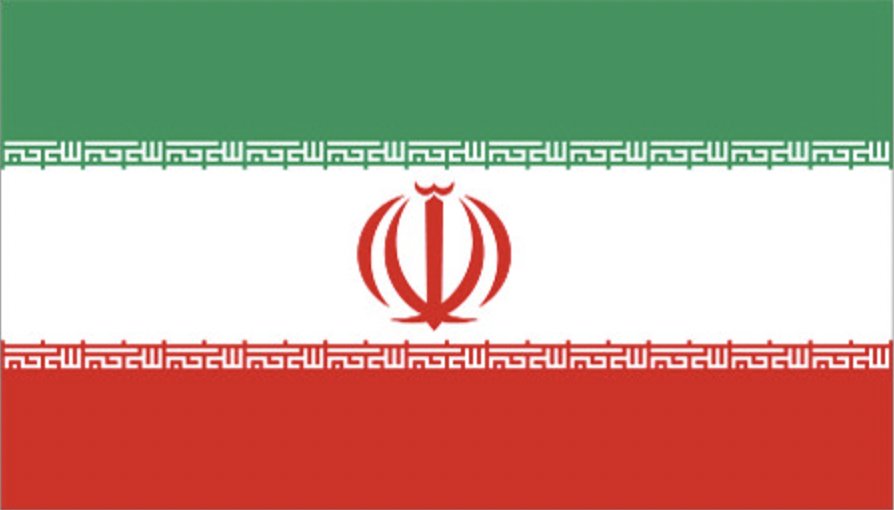
October 18, 2025 marked the official expiration of the Joint Comprehensive Plan of Action (JCPOA). What began 10 years ago as a moment of optimism for Western-Iranian relations and a future of nuclear disarmament has culminated in yet another missed opportunity for lasting peace. As this decade of volatile nuclear policy comes to an end, Western leaders have expressed no intention of deviating from the coercive disarmament strategies that contributed to Iran’s initial efforts to develop weapons of mass destruction. Additionally, trends towards isolationism and the decay of international institutions intensify the threat of nuclear annihilation. The next generation of leaders, who have grown up with the hope of a denuclearized world, are now left with the challenge of repairing a fragmented system of nuclear diplomacy.
In order to understand why Iran’s nuclear program is so contentious, it is important to lay out the history of nuclear diplomacy leading up to today. In 1953, U.S. President Dwight Eisenhower delivered his famous “Atoms for Peace” speech before the UN General Assembly, calling on world leaders to collectively decide that “the miraculous inventiveness of man shall not be dedicated to his death, but consecrated to his life”. The speech inspired the establishment of the International Atomic Energy Agency (IAEA), an international institution promoting the development of safe and peaceful nuclear technology. However, this moment of unity also led the U.S. to begin sharing nuclear technology with Iran, which would eventually help kickstart Iran’s nuclear weapons program.
In 1968, Iran signed on to the Nuclear Non-Proliferation Treaty (NPT) as a non-nuclear weapons state, meaning that any future attempt to develop nuclear weapons would be a direct violation of international law. However, following its Islamic Revolution in 1979, Iran began to develop its nuclear weapons program in secret. Iran managed to keep its nuclear weapons program concealed until 2002, when an Iranian dissident faction exposed the existence of two uranium enrichment facilities to the international community. This discovery began an extended period of international efforts to halt Iran’s development of nuclear weapons.
Since the 1979 Revolution, the United States, European Union, and other Western powers repeatedly levied economic sanctions against Iran. Through the freezing of Iranian assets, trade embargo, taxes on corporations, and other strategies, the U.S. and other Western allies have significantly damaged the Iranian economy over the years. Despite their crippling economic effects, sanctions never curbed Iran’s ability or will to develop nuclear weapons.
However, a new era of diplomacy was ushered in when the U.S. and Iran began “back channel” talks regarding the future of Iran’s nuclear program in 2012. Over the next three years, Iran and the “P5+1” countries (China, France, Germany, Russia, the United States, and the United Kingdom) engaged in intensive diplomatic efforts, culminating in the announcement of the Joint Comprehensive Plan of Action (JCPOA) on July 14, 2015.
The agreement mandated that Iran halt highly-enriched uranium production, decrease its existing stockpiles of enriched uranium, and comply with IAEA monitoring of its nuclear sites. These demands were met with assurances from the P5+1 countries to gradually reduce sanctions on Iran. It is estimated that the JCPOA delayed Iran’s breakout time (the time necessary to amass enough fissile material for a nuclear weapon) from about 2-3 months to over a year.
However, the JCPOA’s effectiveness in limiting Iran’s nuclear capabilities was short-lived. In 2018, the United States unilaterally withdrew from the JCPOA and reinstated heavy sanctions on Iran under the first Trump administration. Following the exit of the United States, it did not take long for Iran to reaccelerate its uranium enrichment, with the IAEA estimating it would take Iran just a couple weeks to develop enough highly-enriched uranium for a nuclear weapon as of November 2024.
United States foreign policy in the years following their withdrawal from the JCPOA has directly led to the revival of Iran’s will to develop nuclear weapons and has contributed to the volatility of today’s international system. The withdrawal has significantly damaged the credibility of the United States in upholding security assurances going forward. During the Obama administration, the United States engaged in a strategy of multilateralism and seemed committed to tackling nuclear disarmament as a coalition of both nuclear weapons states and non-nuclear weapons states. By negotiating the agreement alongside the P5+1, the United States did not have the sole burden of enforcing the terms of the JCPOA, which gave the agreement increased legitimacy. Since their withdrawal, the U.S. has made a clear switch to a foreign policy of unpredictable, unilateral action.
The U.S. has returned to the ineffective methods of limiting Iran’s nuclear capabilities through coercion. Before the JCPOA developed a framework of accountability between Iran and the P5+1, there was an intermittent cycle of Western powers exchanging sanctions relief for various demands. This kind of transactional diplomacy is what created the crisis of Iranian nuclearization to begin with.
However, sanctions have not even been the most provocative strategy used by the United States to coerce Iran. On June 13, 2025 the United States and Israel led a joint bombing of the Natanz and Esfahan nuclear facilities in Iran. The IAEA’s assessment of the U.S. strike estimates that the Iranian nuclear program was likely only set back a few months. Not only did this strike fail to destroy the targeted facilities, but it also further entrenched both sides in their respective positions of opposition to a diplomatic solution.
The collapse of the JCPOA has had broader implications on the legitimacy of international institutions. Under the JCPOA, Iran agreed to an unprecedented level of IAEA monitoring of its nuclear facilities. Now, the IAEA has lost almost all leverage in enforcing international law in Iran. After France, Germany, and the United Kingdom reintroduced sanctions on Iran in October, an Iranian minister claimed that cooperation with the IAEA was “no longer relevant.” The message this sends to states that might consider developing nuclear technology in the future is clear: complying with IAEA monitoring will be met with punishment and hostility rather than trust.
Additionally, the failure of the JCPOA sets a grim precedent for the future of multilateralism. In the first couple years after the JCPOA came into effect, there was international cooperation from ideologically dissimilar states around enforcing the terms of the agreement. Today, the international scene is much more fragmented. The collapse of the JCPOA has mirrored the declining effectiveness of other international coalitions, such as the UN Security Council. While the JCPOA’s collapse might not be directly responsible for the deterioration of other international institutions, the normalization of unilateral nuclear policy is a slippery slope.
When discussing Western nuclear policy with Iran, one popular mantra comes to mind: “insanity is doing the same thing over and over again and expecting different results.” For Western powers to expect punitive sanctions or military assaults to result in Iran’s denuclearization is to blatantly ignore the past results of these actions. The only way to justify the abandonment of multilateral nuclear diplomacy in the long run is by believing that strength on the international stage can only be achieved through force. Clearly, unilateral attempts to coerce Iran have done nothing but weaken the position of Western powers and escalate tensions between states. The Joint Comprehensive Plan of Action, while not a perfect agreement, made significant strides towards Iran’s nuclear disarmament. The severity of the consequences of further nuclear escalation rests on the actions of the next generation of leaders. There is no group that is better equipped to restore hope for nuclear disarmament than young people. Evidence shows that today’s young people (Gen Z) are more skeptical that nuclear weapons make Americans safer and prevent conflict than any prior generation. As evidenced by movements to combat climate change and other man-made existential threats to humanity, the global youth are not afraid to take on the responsibility of protecting their future. When it comes to nuclear policy, it is in the best interest of humanity to put power in the hands of those willing to depart from the status quo.
Image Credit: Wikimedia Commons.